Lü
The Wandering Stranger
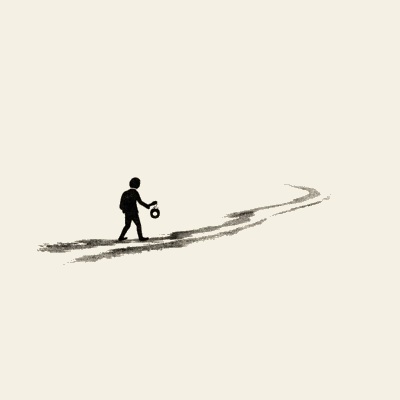
When you receive Hexagram 56, Lü, the I Ching turns your attention to the wandering stranger. The Wanderer. Below is its judgment, its image, and the meaning of each changing line.
The Judgment
The Wanderer. There may be some small attainment and progress. If the wanderer be firm and correct as he ought to be, there will be good fortune.
Classical (Legge)Lu intimates that (in the condition which it denotes) there may be some small attainment and progress. If the stranger or traveller be firm and correct (as he ought to be), there will be good fortune.
The Image
Fire upon the mountain. Lü. The centered one exerts his wisdom and caution in the use of punishments, and does not allow litigations to continue.
Classical (Legge)(The trigram representing) a mountain and above it that for fire form Lu. The superior man, in accordance with this, exerts his wisdom and caution in the use of punishments, and not allowing litigations to continue.
The Changing Lines
The wanderer occupies himself with mean things. He draws on himself further calamity.
Classical (Legge)If the traveller occupy himself with mean things, he will draw on himself further calamity.
The wanderer occupies his lodging-house, carrying his means of livelihood with him, and is provided with good and trusty servants.
Classical (Legge)The stranger or traveller occupies his lodging-house, carrying his means of livelihood with him, and is provided with good and trusty servants.
The wanderer burns his lodging-house and loses his servants. However firm and correct he try to be, he will be in peril.
Classical (Legge)The stranger burns his lodging-house, and loses his servants. However firm and correct he (try to) be, he will be in peril.
The wanderer is in a resting-place. Though he has his property and axe, his heart is not at ease.
Classical (Legge)The traveller is in a resting-place, (but though) he has his property and axe, his heart is not at ease.
He shoots a pheasant. He will lose his arrow, but in the end he will be praised and receive appointment.
Classical (Legge)He shoots a pheasant. He will lose his arrow, but in the end he will be praised and receive appointment.
The bird burns its nest. The wanderer first laughs, and then cries out. He has lost his ox-like docility too readily. There will be misfortune.
Classical (Legge)The bird burns its nest. The stranger first laughs, and then cries out. He has lost his ox(-like docility) too readily. There will be evil.
Ask your own question
StillPoint casts Hexagram 56, Lü, the traditional way, then offers a reflection grounded in your actual question. The full ritual lives on your iPhone.
Cast a reading in StillPoint